Editorial
The past and future of American energy abundance


07.13.2026
/
Posted by
Dan Barcelo
Editorial
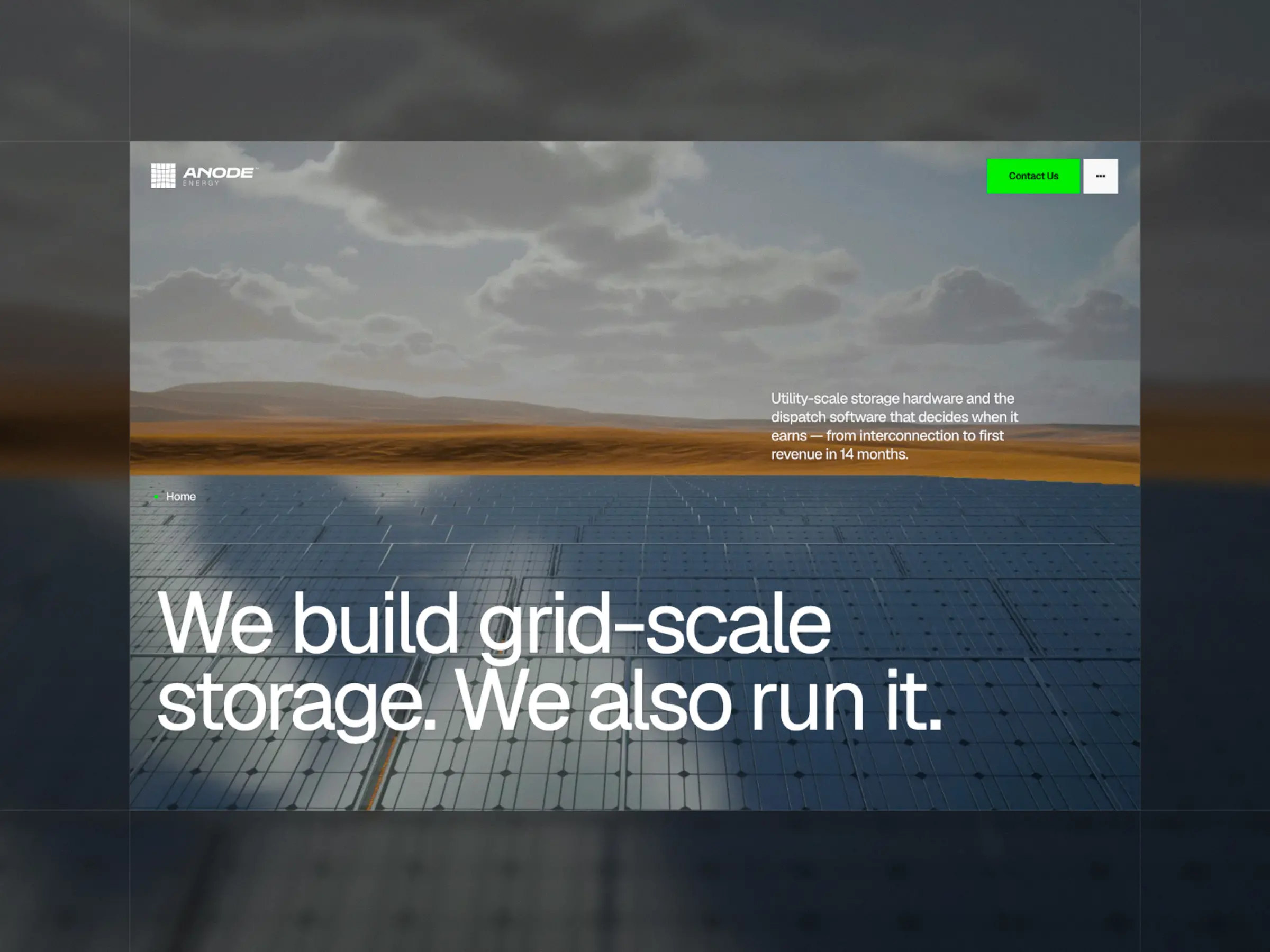
American grids were built by people who assumed demand would grow forever. For a few decades it didn't — and now it does again. This essay is about what the abundance era asks of the grid, and where storage fits.

The return of load growth
Electrification, onshoring, and data centers have ended two decades of flat demand. The queue of generation waiting to interconnect is enormous, but the grid between new supply and new demand was not sized for either. That gap is where prices spike, and where storage earns its keep.
Flat demand let a generation of planners treat the grid as finished infrastructure — something to maintain rather than extend. The habits formed in that era, from interconnection study timelines to transmission cost allocation, are now the binding constraint on growth.
What the last buildout got right
The grid America built in the postwar decades was audacious: interconnections spanning regions, built ahead of demand on the conviction that supply would create its own uses. It was also slow, centrally planned, and paid for by captive ratepayers — a model that does not map onto competitive markets adding gigawatts of variable supply.
Storage as grid infrastructure
Batteries are usually discussed as a renewables accessory. We think that undersells them: storage is transmission you can build in fourteen months, sited where congestion actually bites. The abundance era will be won by whoever can put capacity where the grid needs it, fastest.
The next decade
The winners of the coming buildout will look less like utilities and more like logistics companies: disciplined about siting, ruthless about schedule, and instrumented enough to prove performance. Abundance is not a policy outcome. It is an operations problem, and operations problems get solved by whoever shows up with the shortest cycle time.
Explore More

08.06.2026
Posted by
Russell Gold
Anode reaches 1.4 GWh of contracted storage across ERCOT
Announcement
08.02.2026
Posted by
Russell Gold
Cedar Bayou energizes fourteen months after interconnection
Announcement

07.27.2026
Posted by
Dan Barcelo
Anode publishes its first annual fleet availability report
Shareholder Letter
07.27.2026
Posted by
Dan Barcelo
Dispatch adds day-ahead co-optimization across every site
Announcement

06.30.2026
Posted by
Dan Barcelo
Letter to shareholders on the first half of 2026
Shareholder Letter

06.29.2026
Posted by
Russell Gold
Why four-hour storage is the wrong default for Texas
Editorial
06.11.2026
Posted by
Russell Gold
Anode expands its field operations team in West Texas
Announcement